
Last updated: November 10, 2026 – By Diane Holcomb
November 2026 update: reconfirmed switch pricing and the surprising range of symptoms a bad switch causes.
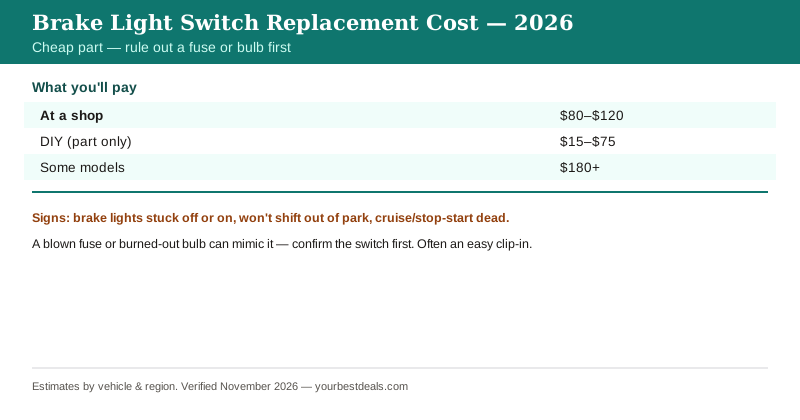
A brake light switch replacement runs about $80 to $120 at a shop, with the part only around $15 to $75 for a DIY; some models run higher, around $180 or more. The switch sits at the top of the brake pedal and tells the car when you press the brake – and because so many systems rely on that signal, a failing switch causes more than just brake-light problems. It can cause brake lights that stay off (dangerous) or stay on (drains the battery), a car that won’t shift out of park, cruise control or stop-start that won’t work, and on some cars a push-button start that won’t engage (since you must press the brake to start). Before replacing it, confirm the switch is the fault – a blown fuse or a burned-out bulb can cause similar brake-light symptoms for less. The switch itself is cheap and often an easy clip-in job behind the pedal.
This is a tiny, cheap part whose failure causes a surprising spread of problems, from no brake lights to a car that won’t come out of park. Let me cover the cost, those varied symptoms, and the cheap things to rule out first.
What you’ll actually pay
Here’s the price picture. These are estimated ranges that vary by vehicle and shop.
| Option | Cost | Notes |
|---|---|---|
| At a shop | $80–$120 | Parts + labor |
| DIY (part only) | $15–$75 | Often clip-in |
| Some models | $180+ | Harder access/part |
The switch is usually mounted on a bracket at the top of the brake pedal arm and plugs in. Brake-light bulbs and wiring should be checked separately from the switch.
Shop Talk
The brake light switch is a tiny, cheap part, but it’s wired into a surprising number of systems, so one bad switch can cause problems that seem unrelated to the brakes. Besides brake lights not working (or being stuck on), a failed switch commonly causes a “won’t shift out of park” problem – because many automatics use the brake switch to confirm your foot is on the brake before releasing the shift lock. It can also kill cruise control (which disengages when you brake), disable stop-start, and on push-button cars prevent starting, since the car wants to see the brake pressed. So if you’ve got a weird combination like no brake lights plus stuck in park, think brake light switch. Before buying one, though, rule out the cheap and simple stuff: a blown brake-light fuse or burned-out bulbs can explain brake lights not working, and those are even cheaper. A stuck-on switch sometimes just needs the little rubber bumper (stopper) behind the pedal that the switch rests against – those crumble over time and can throw off the switch. The switch is usually easy to reach up under the dash at the pedal, clips in, and is adjustable on many cars, so it’s a common, inexpensive fix once it’s confirmed.
Where Drivers Overpay
The switch is cheap, so the overpay risk is mainly misdiagnosis in two directions. If the complaint is only brake lights, a blown fuse or burned-out bulbs can be the cause and are even cheaper – worth ruling out first. And a stuck-on switch is sometimes just the crumbled rubber pedal stopper the switch rests against, an even smaller fix than the switch.
Going the other way, a bad switch is easy to overlook when the symptom looks unrelated – a car stuck in park or dead cruise control – leading to pricier misdiagnosis of the shifter or cruise system. The pattern: on brake-light issues, check the fuse, bulbs, and pedal stopper first; on odd “won’t shift from park / no cruise / won’t start” issues, consider the cheap brake switch before bigger repairs.
The Real Number
A brake light switch is $80 to $120 at a shop ($15 to $75 DIY) – a cheap, often clip-in part. One bad switch can cause far more than brake-light trouble: a car stuck in park, dead cruise control, no stop-start, or a no-start on push-button cars. On brake-light complaints, rule out a blown fuse, burned-out bulbs, and the crumbled pedal stopper first; on odd park/cruise/start issues, consider the cheap switch before bigger repairs.
Frequently Asked Questions
How much does a brake light switch cost to replace?
About $80 to $120 at a shop, with the part alone running roughly $15 to $75 for a DIY. Some models cost more, around $180 or higher, if the switch or access is less standard. These are estimates that vary by vehicle and shop. The switch itself is inexpensive and often a quick clip-in part at the top of the brake pedal, so labor is usually modest. Because the part is cheap, the main value is confirming the switch is actually the problem (rather than a fuse or bulb for a brake-light complaint) so you fix the right thing. For a confirmed bad switch, it’s an affordable repair.
What problems does a bad brake light switch cause?
More than you’d expect, because the switch feeds several systems. The obvious one is brake lights not working (a serious safety issue) or being stuck on (which drains the battery and can confuse drivers behind you). But a failed switch also commonly causes a car that won’t shift out of park (many automatics use the switch to confirm your foot is on the brake), cruise control that won’t engage or won’t cancel, stop-start that won’t function, and on push-button-start cars, a car that won’t start (since it needs to sense the brake pressed). So a seemingly unrelated combination – like no brake lights plus stuck in park – often traces back to this one cheap switch.
Why won’t my car shift out of park?
A very common cause is a failed brake light switch. Most automatics have a brake-shift interlock that keeps the shifter locked in park until it senses your foot on the brake pedal – and it senses that through the brake light switch. If the switch has failed, the car may not register that you’re pressing the brake, so it won’t release the shift lock. That’s why “won’t shift out of park” and “brake lights not working” often appear together. There’s usually a manual shift-lock override (a small slot near the shifter) to get you moving in an emergency, but the real fix is replacing the inexpensive brake light switch once it’s confirmed as the cause.
Could it be a fuse or bulb instead of the switch?
For a pure brake-lights-not-working complaint, yes – and those are worth checking first because they’re even cheaper. A blown brake-light fuse or burned-out brake-light bulbs can cause the lights not to come on, without the switch being bad. (A center high-mount bulb or both rear bulbs failing at once is less common but possible.) Conversely, a brake light switch problem typically affects all the brake lights at once and often brings the other symptoms (stuck in park, no cruise). So checking the fuse and bulbs is a smart, cheap first step on a brake-light issue. If the fuse and bulbs are fine and all the brake lights are affected – especially alongside park/cruise symptoms – the switch becomes the likely culprit.
Is it safe to drive with a bad brake light switch?
If your brake lights aren’t working, no – that’s a serious safety hazard, since drivers behind you can’t tell when you’re braking, and it’s also illegal. That should be fixed right away. If the switch is stuck on (brake lights always lit), you can drive, but it drains the battery, confuses other drivers, and may keep cruise or other systems from working, so fix it promptly. If the failure has you stuck in park, you may not be able to drive at all until you use the shift-lock override or replace the switch. Given the safety stakes with brake lights and how cheap the switch is, a confirmed bad switch should be replaced without delay.
Is replacing a brake light switch a DIY job?
Usually yes – it’s one of the more approachable DIY repairs. The switch is mounted on a bracket at the top of the brake pedal arm, up under the dash; you reach up, unplug the connector, release the switch (often a twist or clip), and install the new one, sometimes with an adjustment so it’s positioned correctly against the pedal. The main steps are confirming the switch is the fault (ruling out fuse and bulbs for a brake-light issue), getting the correct switch, and setting any adjustment properly so it reads the pedal correctly. Access can be a bit awkward reaching under the dash, but no major disassembly is needed on most cars, making it a cheap, satisfying DIY fix.
What causes a brake light switch to fail?
The internal electrical contacts wear out over the enormous number of brake applications over a car’s life, and the switch can fail open (no signal) or stuck. A related common issue is the small rubber bumper or stopper on the pedal that the switch rests against – it can crumble or fall out with age, which changes how the switch sits and can make the brake lights stay on or behave erratically; sometimes replacing that cheap bumper or adjusting the switch is the real fix. Heat, repeated use, and age are the main factors. There’s no scheduled replacement; the switch is replaced when it fails. Because it’s cheap and the symptoms are varied, it’s a common, inexpensive repair on higher-mileage cars.
Sources
Price ranges verified against 2026 brake light switch pricing in November 2026. Dollar amounts are estimates that vary by vehicle and shop.
- Jerry – brake light switch replacement cost
- RepairPal – brake light switch estimates
- ASE – National Institute for Automotive Service Excellence
Related Guides

Diane Holcomb spent seven years as a service advisor at multi-brand dealerships in Charlotte, NC, where “my car won’t come out of park” plus “my brake lights are out” was an instant brake-light-switch flag – a cheap fix for a scary-sounding pair of symptoms. She drives a 2019 Honda CR-V and a hand-me-down 2007 Toyota Camry, and takes no referral fees or advertising money from any shop or chain.