
Last updated: November 8, 2026 – By Diane Holcomb
November 2026 update: reconfirmed hydraulic pump pricing, added the electric-power-steering note, and the fluid-and-leak check-first point.
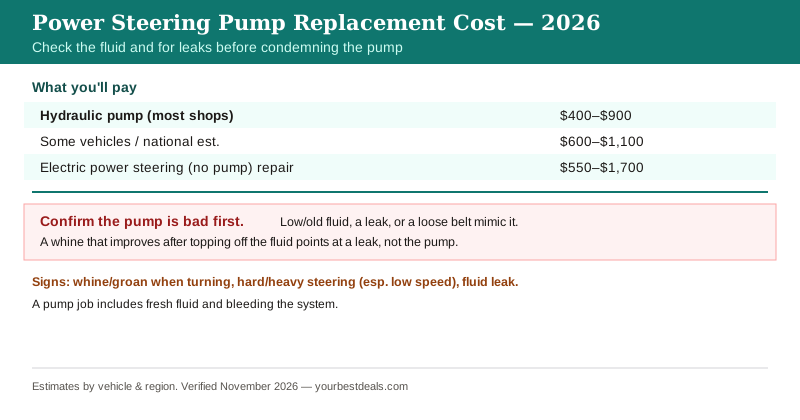
A hydraulic power steering pump replacement runs about $400 to $900 at most shops, with some vehicles landing $600 to $1,100 and national estimates often near $830 to $930 – parts and labor, including fresh power steering fluid and bleeding the system. One important note up front: many newer cars use electric power steering, which has no pump at all; repairing that electric system runs more, roughly $550 to $1,700. Before replacing a pump, confirm it’s actually bad – low or old fluid, a leak, or a loose drive belt can cause the same whining and hard steering for far less money. Signs of a failing pump include a whining or groaning noise when you turn, hard or heavy steering (especially at low speed), and a fluid leak. A whine that quiets down after you top off the fluid points at a leak, not the pump itself.
The trap with this repair is paying for a pump when the real problem was a few dollars of fluid or a leaking line. Let me cover the cost, how to tell if it’s really the pump, and the electric-steering wrinkle.
What you’ll actually pay
Here’s the price picture. These are estimated ranges that vary by vehicle and shop.
| Item | Cost | Notes |
|---|---|---|
| Hydraulic pump (most shops) | $400–$900 | Parts + labor + fluid |
| Some vehicles / national est. | $600–$1,100 | ~$830–$930 common |
| Electric power steering repair | $550–$1,700 | No pump – different system |
A hydraulic pump job includes fresh power steering fluid and bleeding air out of the system. Cost rises with access and whether the pump is belt-driven and easy to reach or buried. If your car has electric power steering (common on newer models), there’s no pump – a steering complaint there means diagnosing the electric motor or module, which is a different and usually pricier repair. Our suspension and steering guide covers how the system works.
Shop Talk
Check the fluid before you let anyone sell you a pump. A whining power steering system is very often just low on fluid – and it’s low because it’s leaking somewhere, usually a hose, the pump seal, or the rack. Here’s the tell: if the whine gets quieter after you top off the reservoir, you have a leak, not a dead pump, and chasing the leak (a hose or a seal) is far cheaper than a pump. Old, dark, foamy fluid can also make a pump whine and steer hard, and a flush sometimes helps. One more cheap culprit: a loose or glazed power steering belt will squeal and let steering go heavy, and that’s a belt adjustment or replacement, not a pump. So the order is: check the fluid level and condition, look under the car for leaks, check the belt – and only then condemn the pump. And know which car you have: if it’s electric power steering, there’s no pump to replace at all, and a “pump” quote on that car is a red flag that the shop hasn’t diagnosed it properly.
Where Drivers Overpay
The big overpay is buying a pump when the real problem was cheaper: low fluid from a leak, old contaminated fluid, or a loose belt – all of which produce the same whine and heavy steering as a failing pump. The quick test is topping off the fluid: if the noise eases, it’s a leak to chase, not a pump to replace. Checking the fluid, looking for leaks, and inspecting the belt first can turn a $700 quote into a far smaller repair.
The second overpay is a misdiagnosis on an electric-power-steering car – those have no pump, so any “power steering pump” quote on one means the problem wasn’t properly identified. Confirm which system your car has. The pattern: check fluid level and condition, look for leaks, check the belt, confirm hydraulic vs. electric, and only replace the pump once those cheaper causes are ruled out.
The Real Number
A hydraulic power steering pump is $400 to $900 (some vehicles $600 to $1,100), including fresh fluid and bleeding. But confirm it’s really the pump first – low or old fluid, a leak, or a loose belt cause the same whine and hard steering for much less. If the whine quiets after topping off the fluid, it’s a leak, not the pump. And if your car has electric power steering, there’s no pump at all; that repair runs more, about $550 to $1,700.
Frequently Asked Questions
How much does it cost to replace a power steering pump?
A hydraulic power steering pump runs about $400 to $900 at most shops, with some vehicles landing $600 to $1,100 and national estimates often near $830 to $930 – parts and labor, including fresh power steering fluid and bleeding the system. Cost varies with how accessible the pump is and the part price for your vehicle. These are estimates that vary by shop and region. Note that if your car has electric power steering rather than a hydraulic pump, there’s no pump to replace and the repair is different (and usually pricier), so confirm which system you have before comparing quotes.
How do I know if my power steering pump is bad?
Classic signs are a whining or groaning noise when you turn (especially at low speed or full lock), hard or heavy steering, and sometimes a power steering fluid leak or low fluid. The catch is that those same symptoms come from cheaper causes – low fluid, old contaminated fluid, a leak, or a loose belt. A useful test: top off the reservoir; if the whine eases, you likely have a leak, not a failed pump. Check the fluid level and condition, look underneath for leaks, and inspect the belt before concluding the pump itself has failed.
Why is my steering whining or hard to turn?
The most common reasons, in order of cost, are low power steering fluid (usually from a leak), old or contaminated fluid, a loose or glazed drive belt, and then the pump itself. Low fluid and a slipping belt both cause whining and heavy steering and are cheap to fix, which is why checking them first saves money. If topping off the fluid quiets the whine, chase the leak rather than replacing the pump. If the fluid is fresh and full, the belt is good, and the steering is still whining or heavy, then the pump (or, on electric systems, the electric steering components) becomes the suspect.
Can I drive with a bad power steering pump?
You can usually still steer, but it becomes hard – especially at low speed and parking – which is a safety concern if the steering goes heavy unexpectedly. Driving with low fluid or a failing pump can also worsen the damage, and running a hydraulic pump dry can ruin it. If the whine and heaviness are mild and the fluid is simply low, topping off and getting it checked soon is reasonable. If steering is seriously heavy or you’re losing assist intermittently, it’s safer to address it quickly rather than risk losing assist in traffic.
Do newer cars even have a power steering pump?
Many don’t. A growing share of newer vehicles use electric power steering (EPS), where an electric motor provides steering assist instead of a hydraulic pump, belt, and fluid. On those cars there’s no pump to replace, and a steering-assist problem means diagnosing the electric motor, the steering module, wiring, or sensors – a different repair that typically runs more, roughly $550 to $1,700. So before you shop a “pump” quote, confirm whether your car is hydraulic or electric. A power steering pump quote on an electric-steering car is a sign the issue wasn’t properly diagnosed.
Should I replace the pump or just flush the fluid?
If the fluid is old, dark, or foamy, a flush with fresh fluid sometimes quiets a whining system and improves steering feel, and it’s much cheaper than a pump – worth trying when contaminated fluid is the likely cause. But a flush won’t fix a pump that has truly failed or a leak that keeps draining the system. So the approach is: if fluid condition looks like the problem, flush and reassess; if there’s a leak, fix the leak; and only replace the pump if it’s confirmed bad with good, full fluid and a sound belt. Your shop should diagnose the cause rather than defaulting to the most expensive fix.
What causes a power steering pump to fail?
Running low on fluid (often from an unrepaired leak) is a leading cause, because the pump relies on fluid for lubrication and can be damaged running dry. Old, contaminated fluid that wasn’t changed accelerates internal wear. Age and high mileage take their toll on the pump’s internal vanes and seals. A failing pump often whines before it quits, giving warning. Keeping the fluid full and in good condition, and fixing leaks promptly, is the best way to extend a hydraulic pump’s life. Electric power steering doesn’t have a pump, so its failures are electrical rather than fluid-related.
Sources
Price ranges verified against 2026 steering repair pricing in November 2026. Dollar amounts are estimates that vary by vehicle and shop.
- RepairPal – power steering pump replacement estimates
- ASE – National Institute for Automotive Service Excellence
- AAA – auto repair resources
Related Guides
- Suspension and Steering Guide
- Rack and Pinion Replacement Cost
- Serpentine Belt Replacement Cost
- Car Repair Cost Estimator

Diane Holcomb spent seven years as a service advisor at multi-brand dealerships in Charlotte, NC, where a whining steering complaint turned out to be low fluid from a cheap leaking hose more often than a dead pump. She drives a 2019 Honda CR-V and a hand-me-down 2007 Toyota Camry, and takes no referral fees or advertising money from any shop or chain.