
Last updated: November 2, 2026 – By Diane Holcomb
November 2026 update: reconfirmed gasket-vs-housing pricing and the do-the-thermostat point.
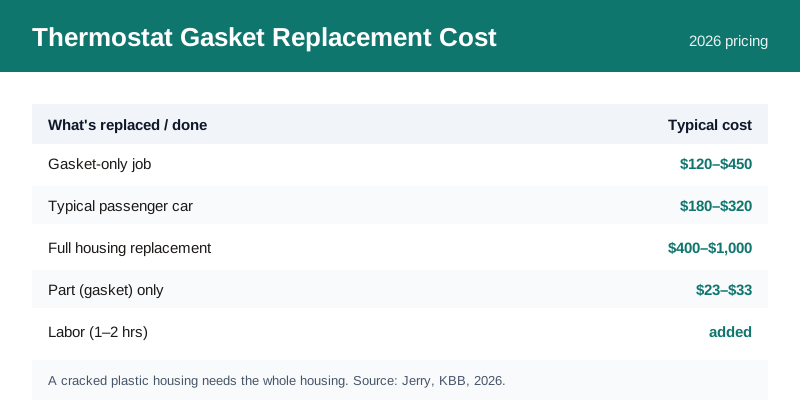
A thermostat housing gasket replacement runs about $120 to $450, with a typical passenger car around $180 to $320. The gasket part itself is just $23 to $33, and labor is 1 to 2 hours – so, as with many cooling jobs, you’re mostly paying for access. If the problem is a cracked plastic housing (common on many modern engines) rather than just the gasket, a full housing replacement is $400 to $1,000. The thermostat gasket (or O-ring/seal) seals the thermostat housing to the engine so coolant doesn’t leak out where they join. It fails with age and heat cycling, causing a coolant leak and sometimes drips at the housing. One key efficiency: because the housing has to come apart to reach the gasket, the thermostat itself is usually replaced at the same time – the thermostat is cheap and the labor is shared.
A coolant leak at the thermostat housing is usually the gasket – but a cracked plastic housing is a bigger job. Let me break it down.
What you’ll actually pay
Here’s the picture. These are estimates that vary by vehicle and shop.
| Item | Cost | Notes |
|---|---|---|
| Gasket-only job | $120–$450 | Typical $180–$320 |
| Gasket (part only) | $23–$33 | Cheap part |
| Labor | 1–2 hrs | Access-driven |
| Full housing (cracked) | $400–$1,000 | Plastic housings |
The thermostat gasket is part of the cooling system; our thermostat guide, coolant leak guide, and radiator flush guide cover the related parts.
Shop Talk
Two things to know here. First, always replace the thermostat when you do the gasket. The thermostat lives inside the housing, so to reach the gasket the housing comes apart anyway – and the thermostat is a cheap part that’s a common failure point itself. Putting in a new thermostat while you’re in there costs a few dollars more and saves you from pulling the housing again soon if the old thermostat fails. That’s why this job is usually “thermostat and gasket,” not gasket alone. Second, watch for the plastic-housing issue. A lot of modern engines use a plastic thermostat housing, and those crack with age and heat – so sometimes the coolant leak isn’t the gasket at all but a crack in the housing itself, which means replacing the whole housing (often sold as an assembly with the thermostat, $400 to $1,000 depending on the car). So a good shop looks at whether it’s the gasket/seal leaking or the housing cracked, because that changes the price. A couple more: the symptom is usually a coolant leak or drip near the housing (and a dropping coolant level), and since you’re opening the cooling system, the coolant gets topped up or refilled and the air bled out. Catch a housing leak before it runs the engine low and overheats.
Where Drivers Overpay
The smart-labor save is doing the thermostat with the gasket: the housing’s already open, the thermostat’s cheap, and skipping it risks pulling the housing again soon when the old thermostat fails. Bundling them is the value move.
The diagnostic point is gasket-versus-cracked-housing: on plastic-housing engines, the leak may be a crack needing the whole housing ($400–$1,000), not a $30 gasket – so confirming which keeps the quote honest. The pattern: determine gasket vs cracked housing, replace the thermostat at the same time, and refill/bleed the coolant properly.
The Real Number
A thermostat gasket job is $120 to $450 (typical $180 to $320) – the gasket is only $23 to $33, the rest is labor. Replace the thermostat at the same time since the housing’s already open and it’s cheap. On modern plastic-housing engines, the leak may be a cracked housing needing the whole assembly ($400 to $1,000), not just the gasket, so confirm which. Fix a housing leak before it runs the engine low and overheats.
Frequently Asked Questions
How much does it cost to replace a thermostat gasket?
A thermostat housing gasket replacement runs about $120 to $450, with a typical passenger car around $180 to $320. The gasket part itself is cheap ($23 to $33), and labor is 1 to 2 hours, so most of the cost is accessing the housing. If the thermostat housing is cracked (common on plastic housings) rather than just the gasket leaking, a full housing replacement runs $400 to $1,000. These are estimates that vary by vehicle and shop. The job usually includes a new thermostat (since the housing is already open and the thermostat is cheap) and refilling the coolant. So the cost depends on whether it’s a gasket-only leak or a cracked housing – confirming which, and bundling the thermostat, determines the accurate price.
What does the thermostat gasket do?
The thermostat gasket (or O-ring/seal) seals the joint between the thermostat housing and the engine, keeping coolant from leaking out where they meet. The thermostat itself sits inside the housing and regulates coolant flow – staying closed when the engine is cold to help it warm up quickly, then opening to let coolant flow to the radiator once it’s warm. The housing bolts to the engine, and the gasket seals that connection against the pressurized coolant. Over time and repeated heat cycling, the gasket (and on plastic housings, the housing itself) can degrade and start to leak. So the gasket’s job is simply sealing – but because it’s in the pressurized cooling circuit, a failed gasket means a coolant leak, which can lower the coolant level and, if ignored, contribute to overheating. It’s a small part with an important sealing role.
Should the thermostat be replaced at the same time?
Yes – it’s the smart, standard approach. The thermostat is housed inside the thermostat housing, so to replace the gasket the housing has to be opened, which exposes the thermostat. Since the thermostat is an inexpensive part and a common failure point itself (a stuck thermostat causes overheating or poor warm-up), replacing it while the housing is already apart costs only a few dollars more and saves you from having to pull the housing again soon if the old thermostat fails. That’s why this repair is typically done as “thermostat and gasket” together rather than the gasket alone. It’s the same shared-labor logic as doing a water pump with a timing belt. So when you replace a thermostat gasket, expect (and ask for) a new thermostat to go in at the same time – it’s cheap insurance against a repeat teardown and a second coolant service.
Is it the gasket or a cracked housing?
That distinction matters for the cost, and it takes a look to tell. On older engines with metal thermostat housings, a coolant leak at the housing is usually the gasket/seal – a cheap gasket-only repair. But many modern engines use plastic thermostat housings, and those become brittle and crack with age and heat cycling. When the housing itself is cracked, replacing the gasket won’t fix it; the whole housing (often sold as an assembly including the thermostat) must be replaced, which costs more ($400 to $1,000 depending on the vehicle). So a shop inspects whether the leak is coming from the gasket/seal or from a crack in the housing body. If it’s a cracked plastic housing, you’re replacing the housing assembly, not just a gasket. Knowing which you’re dealing with – gasket versus cracked housing – is why a quote can range from under $200 to $1,000, and why diagnosis comes first.
What are the signs of a leaking thermostat gasket?
The main sign is a coolant leak at or near the thermostat housing – you may see coolant dripping or pooling in that area of the engine, or crusty, dried coolant residue around the housing. Other signs include a dropping coolant level, the sweet smell of coolant, low-coolant or temperature warnings, and in a worse case overheating if enough coolant is lost. Because the thermostat housing is on the engine (often where an upper radiator hose connects), a leak there is usually visible on inspection. These symptoms overlap with other coolant leaks, so a shop confirms the source is the thermostat gasket or housing versus a hose, the water pump, or elsewhere. If you spot coolant around the thermostat housing or your level keeps dropping, have it checked – and as with any coolant leak, don’t let the engine run low and overheat while you wait.
Is it safe to drive with a leaking thermostat gasket?
Only cautiously and briefly, because it’s a coolant leak – and the danger with any coolant leak is overheating. A small gasket weep might let you drive short distances while watching the temperature gauge and keeping the coolant topped up with the correct type, but a significant leak should be fixed before driving much. If the coolant runs low and the engine overheats, you risk expensive damage (a warped head or blown head gasket), which far exceeds the cost of a gasket job. So treat a leaking thermostat gasket or housing as a fix-it-soon item and monitor your temperature gauge closely. If it climbs toward hot, pull over and shut the engine off. A separate issue: if the thermostat itself is stuck (not just the gasket leaking), that can cause overheating or poor warm-up regardless of coolant level – another reason to address thermostat-area problems promptly rather than driving on them.
Why is a plastic housing a bigger repair?
Because when a plastic thermostat housing cracks, you can’t just reseal it – the whole housing has to be replaced, and that’s a pricier part and often a bigger job than a simple gasket. Many modern engines use plastic (composite) housings to save weight and cost, but plastic gets brittle over years of heat cycling and can crack, warp, or break at a fitting. A crack in the housing body leaks coolant and can’t be reliably patched, so replacement is the fix. The housing is often sold as an assembly that includes the thermostat (and sometimes sensors), which costs more than a bare gasket, and on some engines reaching the housing is more involved. That’s why a cracked plastic housing runs $400 to $1,000 versus $120 to $450 for a gasket-only repair. So the material and failure mode – a cracked plastic housing rather than a worn gasket – is what turns this from a cheap job into a moderate one.
Sources
Price ranges verified against 2026 thermostat housing/gasket pricing in November 2026. Dollar amounts are estimates that vary by vehicle and shop.
- Jerry – thermostat housing replacement cost
- Kelley Blue Book – thermostat replacement cost
- ASE – National Institute for Automotive Service Excellence
Related Guides
- Thermostat Replacement Cost
- Coolant Leak Repair Cost
- Radiator Flush Cost
- Radiator Hose Replacement Cost
- Car Repair Cost Estimator

Diane Holcomb spent seven years as a service advisor at multi-brand dealerships in Charlotte, NC, where a thermostat gasket job always included a new thermostat – the housing was open anyway – and where a cracked plastic housing was the one that turned a cheap fix into a bigger one. She drives a 2019 Honda CR-V and a hand-me-down 2007 Toyota Camry, and takes no referral fees or advertising money from any shop or chain.