
Last updated: November 9, 2026 – By Diane Holcomb
November 2026 update: reconfirmed door replacement pricing and the used-door and insurance points.
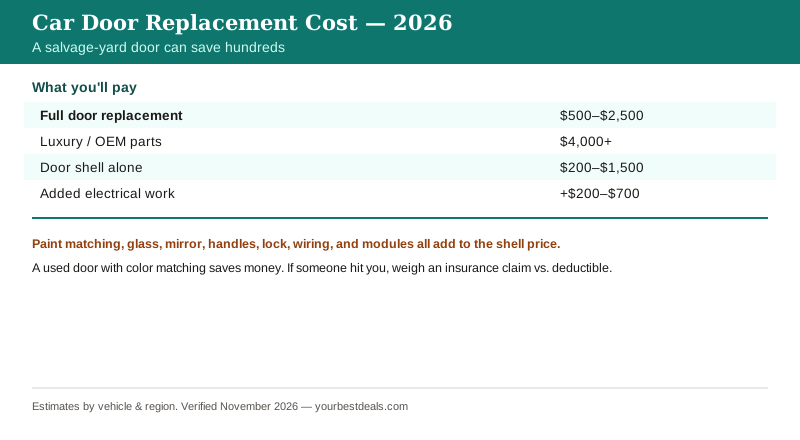
A car door replacement generally runs about $500 to $2,500, and can reach $4,000 or more on luxury vehicles or with OEM parts. The door shell alone runs about $200 to $1,500 (used or aftermarket $600 to $1,500, OEM $1,200 to $4,000 or more), and body-shop labor runs roughly $75 to over $200 an hour. The reason the range is so wide is everything that lives in and on a door: paint matching, and transferring or replacing the glass, mirror, handles, lock, wiring, and electronic modules, all add cost – electrical work alone can add $200 to $700. A used door from a salvage yard, color-matched to your car, is a common way to save hundreds. And if another driver caused the damage, an insurance claim may cover it, so weigh a claim against your deductible.
A door is more than a panel – it’s full of glass, electronics, and hardware, which is why the price swings so much. Let me cover the costs, the salvage-door save, and the electrical and insurance angles.
What you’ll actually pay
Here’s the price picture. These are estimated ranges that vary by vehicle and shop.
| Item | Cost | Notes |
|---|---|---|
| Full door replacement | $500–$2,500 | Most vehicles |
| Luxury / OEM parts | $4,000+ | High-end |
| Door shell alone | $200–$1,500 | Used/aftermarket cheaper |
| Added electrical work | +$200–$700 | Windows, locks, modules |
A modern door contains the window and regulator, mirror, lock and latch, handles, speakers, wiring, and sometimes modules for windows and locks – these transfer to a new shell or add to the cost. Our body, paint and cosmetic repair guide covers related repairs.
Shop Talk
The big lever on a door replacement is where the shell comes from. A new OEM door shell can be $1,200 to $4,000-plus on its own, while a used door from a salvage yard (often matched to your exact year and even your color) can run a fraction of that, saving hundreds. The catch with a used door is color: if the salvage door isn’t your color, you still pay to paint and blend it, so a color-matched used door is the real bargain. Ask the shop whether they’ll work with a used door, or source one yourself from a reputable salvage operation. The second thing to understand is that a door isn’t just a panel – it’s packed with the window glass and regulator, the mirror, the latch and lock, handles, speakers, wiring, and sometimes electronic modules. A good estimate either transfers your working parts into the new shell or includes replacements, and anything electrical (power windows, locks, a module) can add a few hundred dollars. Finally, before you pay out of pocket, think about insurance: if someone hit your parked car or you were in a collision, the door may be a claim, and if the other driver’s at fault, their insurance may cover it entirely. Even on your own policy, a $2,000 door against a $500 deductible can be worth a claim. Get the estimate first, then decide.
Where Drivers Overpay
The first overpay is defaulting to a new OEM door shell when a color-matched used door from a salvage yard would save hundreds. The caveat is paint: an off-color used door still needs painting and blending, so the real bargain is one that matches your color. Asking the shop to work with a used door, or sourcing one yourself, is the key save.
The second is not checking insurance. A door replacement running $1,000 to $2,500-plus can be worth a claim against a lower deductible, and if another driver is at fault their insurance may cover it entirely. The pattern: price a color-matched used door against new OEM, confirm which internal parts transfer vs. get replaced, account for any electrical work, and weigh an insurance claim before paying out of pocket.
The Real Number
A car door is $500 to $2,500, up to $4,000+ with luxury or OEM parts – wide because a door is full of glass, hardware, wiring, and modules, plus paint. A color-matched used door from a salvage yard can save hundreds over new OEM (an off-color one still needs painting). Electrical work can add $200 to $700. If someone hit you, weigh an insurance claim against your deductible – if they’re at fault, their insurance may cover it.
Frequently Asked Questions
How much does it cost to replace a car door?
A full door replacement generally runs about $500 to $2,500, and can reach $4,000 or more on luxury vehicles or with OEM parts. The door shell alone is about $200 to $1,500 (used or aftermarket $600 to $1,500, OEM $1,200 to $4,000-plus), and body-shop labor runs roughly $75 to over $200 an hour. These are estimates that vary by vehicle and shop. The wide range reflects paint matching and all the components inside a door – glass, mirror, lock, handles, wiring, and modules – that must be transferred or replaced. A used, color-matched door can lower the cost significantly, so it’s worth getting estimates both ways.
Why is car door replacement so variable in cost?
Because a door is far more than a metal panel. Inside and on it are the window glass and its regulator/motor, the side mirror, the latch and lock mechanism, interior and exterior handles, speakers, wiring harnesses, and on many cars electronic modules for the windows and locks. Replacing a door means either transferring all your working parts into a new shell or buying those parts, plus painting and blending the shell to match. The shell itself ranges widely (cheap used to expensive OEM), labor rates vary by region, and electrical work adds more. All of that produces a broad price range, which is why your specific car, the parts source, and the damage determine the real number.
Can I use a used door to save money?
Yes, and it’s one of the best ways to cut the cost. A used door from a salvage yard – ideally matched to your exact make, model, year, and color – can cost a fraction of a new OEM shell and save hundreds of dollars. The important caveat is color: if the used door isn’t your color, you still pay to paint and blend it, which eats into the savings, so a color-matched door is the real bargain. Also confirm the used door is straight and rust-free. Ask your body shop whether they’ll install a customer- or shop-sourced used door; many will. For an older or lower-value car especially, a used door is often the sensible, economical choice.
Does a new door need painting?
Almost always, unless you find a used door already in your exact color (and even then, blending may be needed for a seamless match). A new OEM or aftermarket shell comes in primer or a generic finish and must be painted to your car’s color. A used door in a different color also needs painting. Painting involves color-matching to your paint code and blending into adjacent panels so the door doesn’t stand out, which is skilled work and part of the cost. This is why a “cheap” bare shell isn’t the whole price – the paint and blend can add several hundred dollars. When budgeting, assume paint is part of the job unless you’ve specifically sourced a color-matched door.
Will insurance cover a car door replacement?
Often, depending on the cause and your coverage. If the damage came from a collision, collision coverage may pay (subject to your deductible), and if another driver was at fault, their liability insurance may cover it entirely. Damage from something like a falling object, vandalism, or a storm may fall under the non-collision part of your policy. Normal wear isn’t covered. Because a door replacement can run well over $1,000, it’s often worth a claim when the repair clearly exceeds your deductible – a $2,000 door against a $500 deductible, for instance. Get the repair estimate first, then weigh the claim against your deductible and any premium impact, or pursue the at-fault driver’s insurance.
Is it cheaper to repair a door than replace it?
Frequently, yes, if the damage allows. Dents and dings can often be repaired with bodywork or paintless dent repair for far less than a full replacement, and a door skin (the outer panel) can sometimes be replaced instead of the whole door on some vehicles. Replacement becomes necessary when the door is badly bent, the frame or structure is compromised, the internal mechanisms are destroyed, or there’s extensive rust. So before authorizing a full door replacement, ask whether the existing door can be repaired – straightened and refinished, or have just the skin replaced. As with other body panels, the repair-versus-replace question is where the biggest savings usually are, so get an honest assessment.
What internal parts transfer to a new door?
Typically, if they’re undamaged, your window glass and regulator, the mirror, the lock and latch, interior and exterior handles, speakers, wiring, and any electronic modules can be transferred from the old door into a new shell, which keeps the cost down. If those parts were damaged in the same incident, they’re replaced instead, adding to the bill – electrical components especially can add $200 to $700. A used door that comes complete with working parts can simplify this, since fewer items need transferring. When reviewing an estimate, it helps to understand which internal components are being reused versus replaced, as that’s a significant part of the total and explains differences between quotes.
Sources
Price ranges verified against 2026 car door replacement pricing in November 2026. Dollar amounts are estimates that vary by vehicle and shop.
- Lemonade – car door replacement cost
- J.D. Power – car door replacement cost
- ASE – National Institute for Automotive Service Excellence
Related Guides
- Body, Paint and Cosmetic Repair Guide
- Quarter Panel Repair Cost
- Car Window Replacement Cost
- Side Mirror Replacement Cost
- Car Repair Cost Estimator

Diane Holcomb spent seven years as a service advisor at multi-brand dealerships in Charlotte, NC, where a color-matched salvage-yard door often turned a $2,500 estimate into something the customer could actually afford. She drives a 2019 Honda CR-V and a hand-me-down 2007 Toyota Camry, and takes no referral fees or advertising money from any shop or chain.