
Last updated: November 9, 2026 – By Diane Holcomb
November 2026 update: reconciled the price range and labor hours, and merged in the “confirm the diagnosis before the teardown” and cheaper-look-alike guidance.
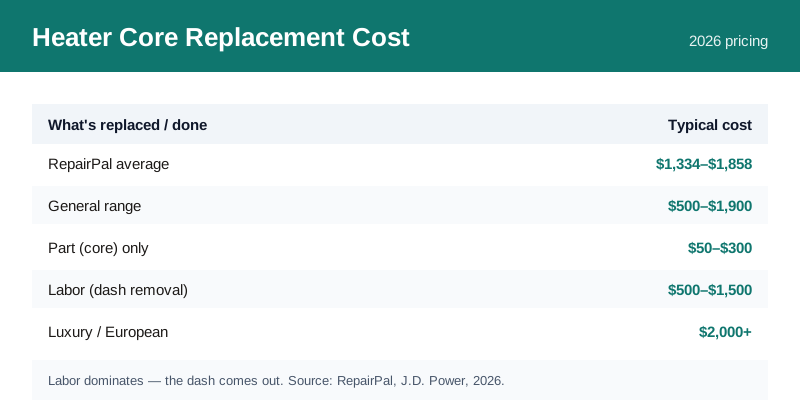
A heater core replacement runs about $800 to $1,900 for most vehicles, with RepairPal estimating roughly $1,334 to $1,858 and luxury or European cars exceeding $2,000. Here’s the frustrating part: the core part itself is only $50 to $300 – it’s the labor ($500 to $1,500) that makes this expensive, because the heater core sits behind the dashboard and reaching it usually means removing much or all of the dash, often 3 to 8 hours of work and commonly 4 to 5 on a mid-range car. The heater core is a small radiator-like unit; hot engine coolant flows through it, a fan blows across it, and that’s how your cabin heater makes warm air. When it fails, it either leaks coolant inside the car – a wet passenger floor, foggy windows with an oily film, and a sweet smell – or it clogs and stops producing heat. Because this is one of the most labor-intensive jobs on the car, it’s worth confirming the heater core is really the cause before authorizing the teardown: a stuck blend door, air in the cooling system, a stuck thermostat, or simply low coolant can mimic the same “no heat” complaint for far less.
This is the classic “cheap part, brutal labor” repair, and that’s exactly why confirming the diagnosis before the dash comes out matters so much. Let me cover the cost, the labor reality, the warning signs, and the cheaper look-alikes.
What you’ll actually pay
Here’s the picture. These are estimates that vary a lot by vehicle and shop.
| Item | Cost | Notes |
|---|---|---|
| Most vehicles | $800–$1,900 | Part is cheap; labor dominates |
| RepairPal average | $1,334–$1,858 | Varies widely by car |
| Core (part only) | $50–$300 | Cheap part |
| Labor (dash out) | $500–$1,500 | 3–8 hours; 4–5 common |
| Luxury / European | $2,000+ | More complex teardown |
A heater core leak is a cooling-system leak inside the cabin, so it ties into the engine’s coolant circuit. Our coolant leak guide and coolant flush guide cover the related maintenance, and the blend door and thermostat below are the common cheaper look-alikes.
Shop Talk
Because pulling the dash is where almost all the money goes, the single most important step is confirming the heater core is actually the problem before anyone starts. A “no heat” complaint has several cheaper causes: low coolant, air trapped in the cooling system, a stuck thermostat (making the engine run cool), or a stuck blend door – the little flap that directs cabin air across the heater core. Any of those can leave you with weak or no heat without the heater core being bad at all, and they cost a fraction of a heater core job. So the signs that point specifically at the heater core are the leak symptoms: a sweet, syrupy coolant smell inside the cabin, a greasy film fogging the inside of the windshield that’s hard to wipe off, damp or wet carpet on the passenger floor, and coolant disappearing with no puddle under the car (because it’s leaking inside). If you’ve got those, it’s likely the heater core. If it’s just weak heat with none of the leak signs, push the shop to rule out the cheap stuff first. A clogged (not leaking) core can sometimes be back-flushed to clear debris as a cheaper first attempt before committing to replacement, though it doesn’t always work and won’t fix a leak. And because the dash is already coming apart, it’s worth asking whether any other aging parts back there – a blend door actuator, HVAC components – should be done at the same time, since you won’t want to pay that labor twice. This is also a repair where a second quote is reasonable, given how much the labor spreads between shops.
Where Drivers Overpay
The biggest risk is authorizing a full dash-out heater core job for a “no heat” complaint that was actually a cheaper cause – low coolant, trapped air, a stuck thermostat, or a stuck blend door. Those produce weak or no heat without a bad heater core, and they cost a fraction of the job. Confirming the heater core specifically, through the leak signs, before the teardown is the key protection.
Beyond that, there isn’t much room to overpay on the part itself – it’s cheap. The spread is all in labor, which varies a lot between shops because it’s often a full-day dash-out job, so getting a second quote is truly worth it here. And since the dash is already apart, replacing any other aging parts back there avoids paying that labor again. The pattern: confirm via the leak signs, rule out the cheap look-alikes, try a back-flush if it’s just clogged, get a second labor quote, and bundle anything else behind the dash.
The Real Number
A heater core is $800 to $1,900 (RepairPal $1,334 to $1,858, luxury $2,000+) – but the core is only $50 to $300; the rest is labor to pull the dash (3 to 8 hours). Confirm it’s really the heater core before that teardown: the telling signs are leak symptoms – a sweet coolant smell inside, foggy greasy windows, damp passenger carpet, and coolant vanishing with no puddle. Plain weak heat can be low coolant, trapped air, a stuck thermostat, or a blend door, all far cheaper. If it’s just clogged, ask whether a back-flush could restore heat first, get a second labor quote, and bundle any nearby aging parts while the dash is out.
Frequently Asked Questions
How much does it cost to replace a heater core?
About $800 to $1,900 for most vehicles, with RepairPal estimating roughly $1,334 to $1,858 and luxury or European vehicles exceeding $2,000. The striking breakdown: the heater core part itself is only $50 to $300, while labor is $500 to $1,500 – because the core sits behind the dashboard and reaching it usually requires removing much or all of the dash, often 3 to 8 hours of work and commonly 4 to 5 on a mid-range car. These are estimates that vary widely by vehicle and shop, and labor rates differ by region, so an accurate price really needs your make and model. Because the cost is almost entirely labor and varies between shops, getting a second quote is worthwhile – and confirming it’s actually the heater core before this big job matters even more.
What are the signs of a bad heater core?
The telling signs are leak symptoms: a sweet, syrupy coolant smell inside the cabin; a greasy or oily film fogging the inside of the windshield that’s hard to clear; damp or wet carpet on the passenger-side floor; and coolant disappearing from the reservoir with no puddle under the car (because it’s leaking internally). You may also get weak or no heat, or see the temperature gauge affected if enough coolant is lost. The leak signs are what point specifically at the heater core – weak heat on its own can come from cheaper causes. Because these symptoms, especially the wet floor and sweet smell inside, are fairly specific to the heater core, they help distinguish it from an engine-bay coolant leak. If you notice the smell, the foggy windshield, or wet carpet together with heating problems, the heater core is the likely culprit and worth investigating, since a leaking core also means you’re losing coolant.
Can weak or no heat be something cheaper than the heater core?
Yes, and it’s worth checking before any teardown, because the dash-out labor is where almost all the cost is. A “no heat” or “weak heat” complaint often comes from cheaper causes: low coolant, air trapped in the cooling system (an air pocket), a stuck-open thermostat making the engine run cool, or a stuck blend door – the flap that directs cabin air across the heater core. Any of these can leave you cold without the heater core being bad, and they cost far less to fix. The heater core becomes the prime suspect mainly when the leak signs are present: the sweet coolant smell inside, the greasy windshield fog, damp passenger carpet, and coolant vanishing with no puddle. So if it’s only weak heat with none of those leak signs, a good shop should rule out the inexpensive causes first; if the leak signs are there, the heater core is likely. This confirm-first step is the main thing protecting you from paying for a dash-out job to fix something a cheaper repair would have solved. For one common look-alike, see our thermostat guide.
Why is the labor so expensive for a cheap part?
Because of where the heater core lives, not the part price. On most vehicles the heater core is mounted inside the HVAC housing behind the dashboard, so to replace it the technician typically has to remove much or all of the dash – disconnecting the steering column, airbags, wiring, trim, and ductwork – then open the HVAC case, swap the core, and reassemble everything. That’s often 3 to 8 hours of careful work, commonly 4 to 5 on a mid-range car. So even though the core costs only $50 to $300, the labor to reach it and put the interior back together is $500 to $1,500, dominating the bill. On a few vehicles the heater core is more accessible, making the job cheaper, but on most it’s a major teardown. It’s a classic “cheap component, buried location” repair – the access, not the part, is what you’re paying for, which is exactly why confirming the diagnosis before starting matters so much.
Can a clogged heater core be flushed instead of replaced?
Sometimes, and it’s worth trying first when the problem is no heat (a clog) rather than a leak. If the heater core is clogged with debris, rust, or scale – restricting coolant flow so it can’t make heat – a shop can attempt to back-flush it (running fluid through it in reverse to clear the blockage) without removing the dash. This is far cheaper than replacement and can restore heat if the clog clears. However, it doesn’t always work, and it won’t help a heater core that’s leaking (a flush can’t fix a leak). So a flush is a reasonable, lower-cost first attempt for a clogged core, with full replacement as the fallback if flushing fails or the core is leaking. Keeping your coolant fresh with regular flushes helps prevent the clogging that leads to this in the first place – see our coolant flush guide.
Is it safe to drive with a bad heater core?
It’s drivable but comes with real downsides, so it shouldn’t be ignored. A leaking heater core means you’re losing coolant, which risks the engine running low and overheating – so you’d need to monitor and top up the coolant and watch the temperature gauge. The leaked coolant inside the car also fogs the windows (a visibility and safety issue) and creates a sweet smell, and coolant vapor in the cabin isn’t something you want to breathe over time. A clogged core (no heat) isn’t dangerous mechanically but leaves you without defrost and heat, which is a real safety problem in cold weather. Some owners bypass a leaking heater core temporarily to stop the coolant loss until they can afford the repair, which sacrifices heat but protects the engine. So while you won’t be stranded immediately, a bad heater core is worth addressing – promptly if it’s leaking and causing coolant loss or foggy windows, and before winter if it’s a no-heat clog.
How long does a heater core last, and should other parts be done while the dash is out?
A heater core isn’t a scheduled-maintenance part and often lasts the life of the car. When one fails, it’s usually from internal corrosion or clogging – frequently tied to neglected or contaminated coolant, or using the wrong coolant, which lets the thin passages corrode or plug up. So heater core longevity is closely linked to cooling-system maintenance: keeping fresh, correct coolant in the system and avoiding mixing incompatible types helps the heater core (and the radiator) last. Because the expensive part of replacement is removing the dash – and that access is temporary – it’s often worth doing other aging components reachable only with the dash out at the same time: a blend door actuator, certain HVAC parts, the evaporator if it’s aging or you’ve had AC issues, or known-weak trim and wiring. If any of those are marginal on a high-mileage car, doing them while the dash is already apart saves paying that major labor again later. It’s a case-by-case decision, so ask the shop what’s accessible and really due – you don’t want to replace good parts needlessly, but anything worn and buried back there is dramatically cheaper to handle now than in a separate future visit.
Sources
Price ranges verified against 2026 heater core replacement pricing in November 2026. Dollar amounts are estimates that vary by vehicle and shop.
- RepairPal – heater core replacement cost
- J.D. Power – heater core replacement cost
- ASE – National Institute for Automotive Service Excellence
Related Guides
- Coolant Leak Repair Cost
- Thermostat Replacement Cost
- Blend Door Actuator Replacement Cost
- Coolant Flush Cost
- Car Repair Cost Estimator

Diane Holcomb spent seven years as a service advisor at multi-brand dealerships in Charlotte, NC, where a wet passenger floor and foggy, greasy windows meant a heater core – and where the estimate always came with a careful conversation first, because the labor was too big to spend on a guess. She drives a 2019 Honda CR-V and a hand-me-down 2007 Toyota Camry, and takes no referral fees or advertising money from any shop or chain.