
Last updated: November 4, 2026 – By Diane Holcomb
November 2026 update: reconfirmed bumper-to-bumper coverage, typical terms, and the powertrain distinction.
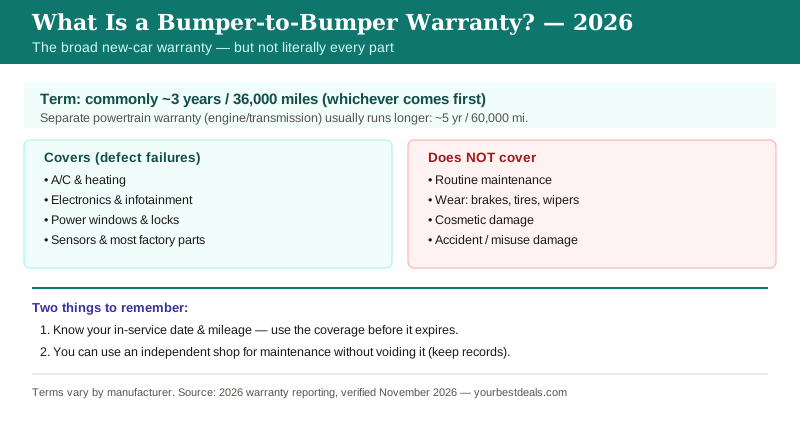
A bumper-to-bumper warranty is the broad new-car warranty that covers most components between the front and rear bumpers for a set period – commonly about 3 years or 36,000 miles, whichever comes first. It covers defect-related failures of things like the air conditioning, electronics, infotainment, power windows and locks, and sensors. Despite the name, it doesn’t literally cover every single part: routine maintenance, wear items (brakes, tires, wipers), cosmetic damage, and accident or misuse damage are all excluded. A separate powertrain warranty covers the engine and transmission for longer, usually about 5 years or 60,000 miles. Understanding what’s actually covered – and knowing when your coverage runs out – is what keeps you from paying for a repair the manufacturer owes.
People at the dealership often thought “bumper-to-bumper” meant everything was free for three years, and then felt cheated when a brake job or a scratch wasn’t covered. It’s not a scam – it’s just that the name oversells it. Let me explain exactly what this warranty covers, what it doesn’t, how it differs from the powertrain warranty, and how to make sure you actually use it.
What it covers – and doesn’t
The bumper-to-bumper warranty (also called a basic or full new-car warranty) covers the repair or replacement of most factory components that fail due to a defect in materials or workmanship. That’s a broad list: air conditioning and heating, the electrical system, electronics and infotainment, power windows and locks, sensors, and the great majority of parts on the car. If a covered part fails from a manufacturing defect within the term, the manufacturer fixes it at no charge to you.
What it doesn’t cover matters just as much. Routine maintenance (oil changes, filters, fluids) is your responsibility. Wear items – brake pads, tires, wiper blades, and often the clutch – are excluded because they’re expected to wear out. Cosmetic damage (scratches, dents, interior stains) isn’t covered, nor is damage from accidents, misuse, modifications, or neglect. So the warranty protects against parts failing when they shouldn’t, not against the normal costs and hazards of using the car. The “bumper-to-bumper” name is marketing shorthand, not a literal promise. Our car repair money guide puts this in the broader ownership-cost picture.
Bumper-to-bumper vs. powertrain
New cars come with two main warranties that run on different clocks, and confusing them costs people money. The bumper-to-bumper warranty is broad but shorter – commonly about 3 years or 36,000 miles. The powertrain warranty is narrower but longer, typically about 5 years or 60,000 miles (some brands much longer), and it covers the most expensive core components: the engine, transmission, and drivetrain.
The practical upshot is that after your bumper-to-bumper coverage ends, you still have powertrain protection for the big-ticket engine and transmission failures for a while longer. So a failed infotainment screen at 40,000 miles might be out of bumper-to-bumper coverage, while a transmission failure at the same mileage could still be covered under powertrain. Knowing which warranty applies to which part, and how much time or mileage is left on each, is exactly the knowledge that lets you claim a covered repair instead of paying for it. Always check both before authorizing a major repair.
Shop Talk
The single most valuable thing to know about your warranty is your in-service date and mileage, because coverage ends at whichever limit comes first. People lose free repairs by not realizing they’re near the cliff – a problem that would’ve been covered at 35,000 miles becomes their bill at 37,000. If something is acting up as you approach a warranty limit, get it documented at the dealer before the limit passes, since a claim opened in the window can be honored. Also, two things drivers don’t realize: the balance of the factory warranty transfers to you when you buy a used car (check the remaining coverage before assuming a repair is on you), and you can do your maintenance at an independent shop or yourself without voiding the warranty, as long as you keep records. Don’t let the dealer convince you otherwise.
Where Drivers Overpay
The biggest overpay is paying for a repair that was still under warranty because you didn’t check. Both the bumper-to-bumper and powertrain clocks are easy to lose track of, and a covered failure should cost you nothing – so always verify your coverage (by VIN with the manufacturer or dealer) before authorizing any significant repair. This is especially common on used cars, where buyers don’t realize the remaining factory warranty transferred to them and pay out of pocket for something that was covered.
The second overpay is letting a warranty-window problem lapse. If a component is acting up as you near a mileage or time limit, get it documented at the dealer before the limit passes, rather than waiting and losing the coverage. And the third is buying maintenance at the dealer under the false belief it’s required to keep the warranty valid – it isn’t; an independent shop with kept records works fine. So the money-smart moves are simple: know your two warranty limits, check coverage before big repairs, document issues before deadlines, and don’t overpay for dealer maintenance you could get cheaper. Knowing what you already have is free money left on the table if you skip it.
The Real Number
A bumper-to-bumper warranty covers most factory components’ defect failures – A/C, electronics, power accessories, sensors – for commonly about 3 years or 36,000 miles, but not maintenance, wear items, cosmetics, or accident damage. It’s separate from the longer powertrain warranty (about 5 years/60,000 miles) that covers the engine and transmission. Know both limits and your in-service date, because a covered repair costs you nothing – and check your coverage (especially on a used car, where it transfers) before paying for any major repair. You can also use an independent shop for maintenance without voiding it.
Frequently Asked Questions
What does a bumper-to-bumper warranty actually cover?
It covers the repair or replacement of most factory components that fail due to a defect in materials or workmanship – a broad list including air conditioning and heating, the electrical system, electronics and infotainment, power windows and locks, sensors, and the majority of parts on the car. If a covered part fails from a manufacturing defect within the term, the manufacturer fixes it free. Despite the name, it doesn’t cover literally everything: routine maintenance, wear items like brakes and tires, cosmetic damage, and accident or misuse damage are excluded. So it protects against parts failing prematurely from defects, not against normal use, upkeep, or hazards.
How long does a bumper-to-bumper warranty last?
Most bumper-to-bumper warranties last about 3 years or 36,000 miles, whichever comes first, though some manufacturers offer longer terms. This is separate from and shorter than the powertrain warranty, which typically covers the engine and transmission for about 5 years or 60,000 miles or more. Because coverage ends at whichever limit (time or mileage) you reach first, it’s important to know both your in-service date and your mileage. A high-mileage driver may hit 36,000 miles well before 3 years, while a low-mileage driver may reach 3 years first. Knowing exactly where you stand lets you use the coverage before it expires rather than paying for a repair that would have been free.
What’s the difference between bumper-to-bumper and powertrain warranty?
They’re two separate warranties with different scopes and lengths. The bumper-to-bumper warranty is broad – covering most components – but shorter, commonly about 3 years or 36,000 miles. The powertrain warranty is narrower, covering the engine, transmission, and drivetrain, but longer, typically about 5 years or 60,000 miles or more. So after your bumper-to-bumper coverage ends, you still have powertrain protection for the most expensive core components for a while. A failed sensor at 40,000 miles might be past bumper-to-bumper coverage, while a transmission failure at the same point could still be covered under powertrain. Always check which warranty applies to the failed part and how much of each remains.
Does bumper-to-bumper cover brakes and tires?
Generally no. Brake pads, brake rotors, tires, wiper blades, and often the clutch are considered wear items – parts expected to wear out with normal use – and are excluded from bumper-to-bumper coverage. Tires usually carry their own separate warranty from the tire manufacturer rather than the automaker. So a brake job or new tires is your cost even during the warranty period. The warranty covers parts that fail from a defect when they shouldn’t, not the normal replacement of components designed to wear. This is a common point of confusion, since the “bumper-to-bumper” name suggests everything is covered, but wear items are a standard and universal exclusion.
Does the warranty transfer if I buy a used car?
Usually yes – the balance of the factory bumper-to-bumper and powertrain warranties typically transfers to a subsequent owner, based on the car’s original in-service date and mileage rather than when you bought it. So a 2-year-old car with 20,000 miles may still have remaining bumper-to-bumper coverage and plenty of powertrain coverage left, which comes with the car at no extra cost. This is valuable and often overlooked: check the remaining factory warranty (by VIN with the manufacturer or dealer) before buying a used car and before paying for any repair, because you may be entitled to a free fix. Some manufacturers have minor transfer conditions, but the coverage generally carries over.
Can I use any mechanic without voiding the warranty?
For maintenance, yes. Under US law, a manufacturer generally cannot void your factory warranty simply because you had routine maintenance or repairs performed at an independent shop or did them yourself, provided the required services were done on schedule with proper parts and you keep records. Dealers sometimes imply you must service with them, but that’s not true for maintenance. For an actual warranty claim – a covered defect repair – you’ll typically need to go to a dealer, since they perform warranty work. But for oil changes and routine upkeep, you’re free to use a cheaper independent shop. Just retain your service receipts as proof that maintenance was performed, in case a claim is ever questioned.
What should I do as my warranty is about to expire?
First, know exactly when it ends – both the time and mileage limits, since whichever comes first applies. As you approach the limit, if anything on the car is acting up or making you uneasy, take it to the dealer and have it documented before the warranty lapses, since a claim opened within the window can be honored. It’s also a natural time to decide whether an extended warranty makes sense for your situation, which you can often add before the factory coverage ends. Don’t rush into an extended plan, but do use your remaining factory coverage fully. Getting known issues addressed before the deadline is the difference between a free repair and one you pay for.
Sources
Bumper-to-bumper coverage and term figures verified against 2026 warranty reporting on November 4, 2026. Terms are typical estimates that vary by manufacturer; confirm your specific warranty.
- Cars.com – car warranty coverage types explained, 2026
- CoverageX – new vs used car warranty coverage, 2026
- ConsumerAffairs – car warranty types and cost, 2026
Related Guides
- Car repair money: warranties and costs
- Are extended car warranties worth it?
- Car maintenance schedule and cost
- EV and hybrid ownership cost (battery warranty)

Diane Holcomb spent seven years at Charlotte dealership service desks, where customers routinely thought “bumper-to-bumper” meant everything was free – and lost real money by not tracking when their coverage actually ended. She writes the cost guides on Your Best Deals and takes no referral fees. She drives a 2019 Honda CR-V and a 2007 Toyota Camry.