
Last updated: November 6, 2026 – By Diane Holcomb
November 2026 update: reconfirmed the dipstick-vs-sealed distinction, the color chart, and fluid-change cost.
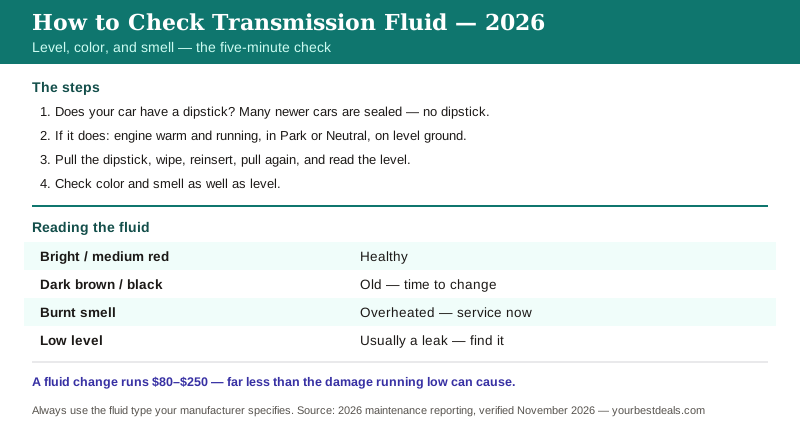
Checking your automatic transmission fluid takes about five minutes and tells you two things: whether the level is right and whether the fluid is still healthy. The catch in 2026 is that many newer cars are sealed and have no dipstick at all, so the first step is figuring out which kind you have. If your car does have a transmission dipstick, you warm the engine, leave it running in Park or Neutral on level ground, and read the level, color, and smell. If it’s sealed, checking is a job for a shop. Either way, healthy fluid is bright to medium red; dark, brown, or burnt-smelling fluid is telling you it’s overdue.
I always liked showing customers this at the service desk, because the transmission is the one system where a five-minute look can flag a $150 service before it becomes a $4,000 repair. Low or burnt fluid is an early warning you can catch yourself. Here’s exactly how to do it, and what the fluid is telling you when you read it.
First: does your car even have a dipstick?
Start here, because it changes everything. Many older and mid-age automatics have a transmission dipstick – usually toward the back of the engine bay, often with a red or yellow handle, separate from the engine oil dipstick. But a lot of newer vehicles use sealed transmissions with no dipstick and no owner-serviceable check point; the manufacturer treats the fluid as “filled for life” or checkable only from underneath with the car level and at a specific temperature. Your owner’s manual will tell you which you have.
If your car is sealed, don’t go hunting for a dipstick that isn’t there – checking or changing that fluid is a shop job that involves a level check from below at a set fluid temperature. That’s not a failing of the car; it’s just how many modern transmissions are built. For everyone with a dipstick, the check is easy and worth doing a few times a year. The rest of this guide covers the dipstick version, since that’s the one you can do yourself.
The five-minute dipstick check
Park on level ground – an uneven surface throws off the reading. Unlike engine oil, transmission fluid is usually checked with the engine warm and running, in Park or Neutral, though a few vehicles specify otherwise, so glance at your manual. With the engine idling, pull the transmission dipstick, wipe it clean with a rag, reinsert it fully, then pull it again and read where the fluid lands. There will be low and full marks; the level should sit between them, ideally near full.
Now read the fluid itself, which matters as much as the level. Healthy automatic transmission fluid is bright to medium red and fairly clear. If it’s dark brown or nearly black, it’s old and due for a change. If it smells burnt – a sharp, acrid odor – the fluid has overheated and the transmission needs service promptly. And if the level is low, that usually means a leak, since transmissions don’t burn fluid the way engines can burn a little oil; a low reading is a reason to look for a red puddle where you park. Top up only with the exact fluid your manufacturer specifies.
Shop Talk
The color check is the one most people skip, and it’s the most useful. Wipe a bit of the fluid on a white paper towel: fresh fluid is clear red, tired fluid is muddy brown, and dead fluid is dark with a burnt smell. That paper-towel test tells you it’s time for a service before any warning light does. One warning, though – never add transmission fluid to a car you’re not sure about, and never assume “fluid is fluid.” Modern transmissions, especially CVTs, are picky, and the wrong fluid type really can cause shifting problems. If you’re topping up, match the exact specification in your manual or ask a shop rather than grabbing a generic bottle.
Where Drivers Overpay
The overpay here is indirect but expensive: skipping this simple check, missing the burnt-fluid warning, and paying for transmission damage that fresh fluid would have prevented. A transmission fluid service runs $80 to $250, while the rebuild that neglected fluid can lead to runs into the thousands. The five-minute check is what tells you the cheap service is due before the damage starts. People don’t overpay on the check – they overpay by never doing it.
The second overpay is at the counter: a shop topping off or changing fluid with the correct product costs a fraction of a repair, but using the wrong fluid can cause problems that cost far more. So if you top up yourself, buy the exact specified fluid – the small savings from a generic bottle isn’t worth risking a transmission. And if your car is sealed, don’t let anyone talk you into a service the manufacturer doesn’t call for, but do get the level professionally checked if you suspect a leak. Matching the manufacturer’s plan is where the money stays in your pocket.
The Real Number
If your car has a transmission dipstick, check the fluid warm and running, in Park or Neutral on level ground: the level should sit between the marks, and the fluid should be bright to medium red, not dark or burnt-smelling. Many newer cars are sealed with no dipstick, in which case checking is a shop job – don’t go looking for a dipstick that isn’t there. A low level usually means a leak worth chasing. This five-minute look is what flags an $80-to-$250 fluid service before it becomes a four-figure repair. Always top up with the exact fluid your manufacturer specifies.
Frequently Asked Questions
How do you check automatic transmission fluid?
If your car has a transmission dipstick, park on level ground and, with the engine warm and idling in Park or Neutral (check your manual, as a few differ), pull the dipstick, wipe it, reinsert it fully, and pull it again to read the level between the low and full marks. Also check the fluid’s color and smell: healthy fluid is bright to medium red, while dark, brown, or burnt-smelling fluid is overdue for a change. Many newer cars are sealed with no dipstick, and on those the check has to be done from underneath at a set temperature, which is a shop job. Top up only with the manufacturer-specified fluid.
Should the car be running when checking transmission fluid?
For most vehicles with a dipstick, yes – transmission fluid is usually checked with the engine warm and running, in Park or Neutral, on level ground. This differs from checking engine oil, which is done with the engine off. That said, a few vehicles specify a different procedure, so it’s worth a quick look at your owner’s manual to confirm. Running the engine circulates the fluid and gives an accurate level. Sealed transmissions without a dipstick have their own procedure done from underneath at a specific fluid temperature, which is why those checks are left to a shop.
What color should transmission fluid be?
Healthy automatic transmission fluid is bright to medium red and fairly clear. As it ages and takes on heat, it darkens to brown, and fully degraded fluid looks dark brown or nearly black, often with a burnt smell. A quick way to judge it is to wipe some on a white paper towel: clear red is good, muddy brown means it’s time for a service, and dark with a burnt odor means the fluid has overheated and the transmission needs attention soon. Color and smell together tell you more than the level alone about whether a fluid change is due.
What does it mean if my transmission fluid is low?
A low transmission fluid level almost always means a leak, because transmissions don’t consume fluid the way an engine can burn a little oil. If your dipstick reads low, look for a reddish puddle where you park and have the leak found and fixed. Running low is risky: the fluid provides the hydraulic pressure that shifts gears and also cools the transmission, so a low level can cause slipping, hard shifts, and overheating that accelerates internal wear. Topping up with the correct fluid is a stopgap, but the leak itself needs repair. Catching a low level early is far cheaper than the damage running low can cause.
My car doesn’t have a transmission dipstick – how do I check it?
Many newer vehicles use sealed transmissions with no dipstick, where the fluid is checked from underneath through a fill or level plug with the car level and the fluid at a specified temperature. That’s a job for a shop with a lift, not a driveway check, so don’t go searching the engine bay for a dipstick that isn’t there. The manufacturer typically treats this fluid as long-life, but it still isn’t truly “lifetime,” and it can be checked and changed on a longer interval or if you suspect a leak. If you notice shifting problems or a leak on a sealed car, have a shop check the level properly.
How often should I check my transmission fluid?
If your car has a dipstick, checking it a few times a year and any time you notice a shifting change or a possible leak is plenty. It’s a five-minute habit that can catch a leak or degraded fluid early. This is separate from actually changing the fluid, which many automatics call for somewhere between 30,000 and 100,000 miles depending on the vehicle and driving conditions. For sealed transmissions you can’t check the level yourself, so you rely on the service schedule and on watching for symptoms like slipping or hard shifts. Either way, acting on early signs is what keeps a cheap service from becoming an expensive repair.
Can I add transmission fluid myself?
You can top up a transmission that has a dipstick and fill tube, but with two cautions. First, use the exact fluid your manufacturer specifies – modern transmissions, especially CVTs, are sensitive, and the wrong type can really cause shifting problems, so don’t grab a generic bottle. Second, if the level is low, adding fluid only addresses the symptom; the underlying leak still needs to be found and fixed. Add slowly and recheck, since overfilling causes its own problems. If your car is sealed with no dipstick, don’t attempt to add fluid yourself – that’s a shop procedure done at a specific temperature from underneath.
Sources
Transmission fluid check procedure and fluid-change cost verified against 2026 maintenance reporting on November 6, 2026. Follow your owner’s manual for your vehicle’s exact procedure and fluid specification.
- Transmission Fluid Change Cost – 2026 pricing and service
- UseCalcPro – transmission service and repair cost, 2026
- Rohnert Park Transmission – fluid change cost and guidance, 2026
Related Guides
- Transmission service and repair cost
- Why won’t my car shift out of park?
- Transmission repair cost estimate
- Oil change cost

Diane Holcomb spent seven years at Charlotte dealership service desks, where she liked showing customers the paper-towel fluid test because it caught a cheap service before it turned into a rebuild. She writes the cost and maintenance guides on Your Best Deals and takes no referral fees. She drives a 2019 Honda CR-V and a 2007 Toyota Camry.